Today I had the immense pleasure to photograph the Western New York Peace Center’s March for women’s rights. This man was standing off to the side as the rest of the crowd filtered into the Buffalo and Erie County Public Library. I asked if I could take his photo and he said sure, but that he didn’t make the sign, one of the women asked him to hold it for her, but he believes in the cause.
All across the country and the world women are being underrepresented, undervalued, and undermined. Only through action can we hope to bring a better future to our children.
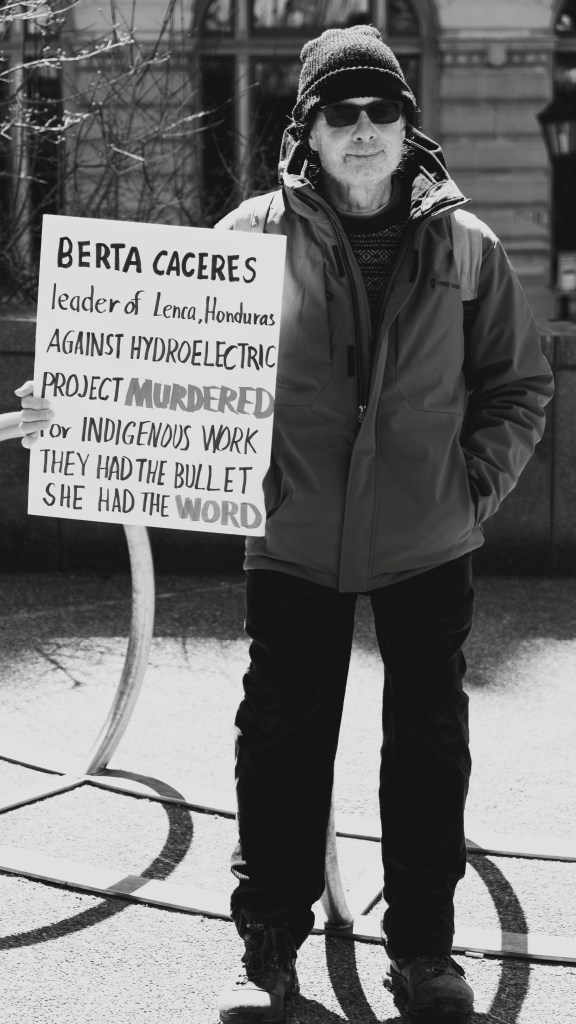
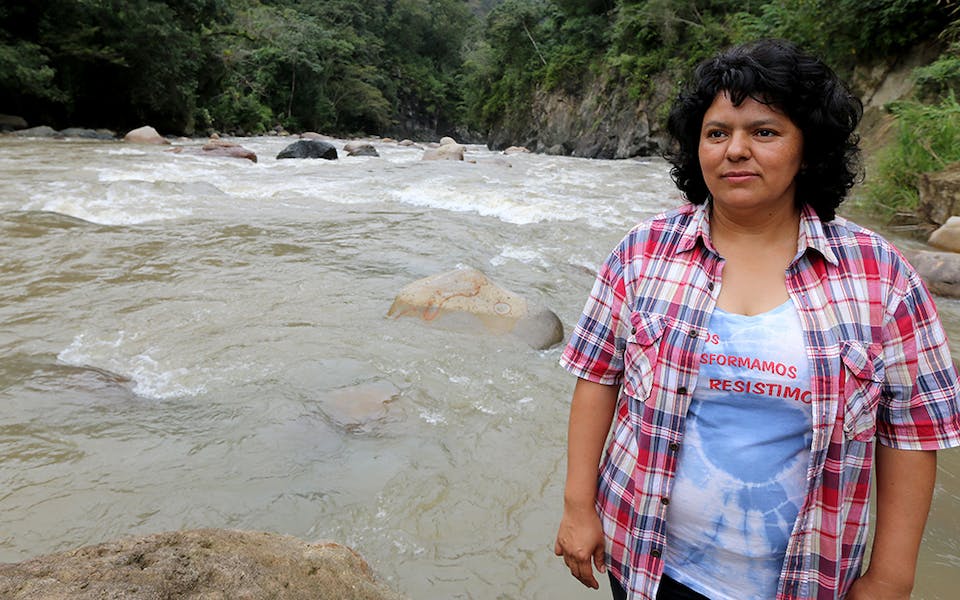
Berta Cáceres was a Honduran environmental activist, indigenous leader, and co-founder and coordinator of the Council of Popular and Indigenous Organizations of Honduras (COPINH). She won the Goldman Environmental Prize in 2015, for “a grassroots campaign that successfully pressured the world’s largest dam builder to pull out of the Agua Zarca Dam” at the Río Gualcarque. She was assassinated in her home by armed intruders, after years of threats against her life.
Cáceres was born on March 4, 1971, in La Esperanza, Honduras. She was the daughter of Austra Bertha Flores López and José Cáceres Molina. She was the eldest of six children.
Cáceres began her activism at a young age. She was a member of the Lenca people, an indigenous group that has been living in Honduras for centuries. The Lenca people have been fighting for land rights and environmental protection for many years.
Cáceres joined COPINH in the early 1990s. Under her leadership, COPINH became a powerful force in the fight for indigenous rights in Honduras. COPINH organized protests, lobbied government officials, and filed lawsuits against companies that were violating the rights of indigenous people.
In 2009, COPINH led a campaign to stop the construction of the Agua Zarca Dam. The dam would have flooded Lenca territory and destroyed their way of life. After years of pressure, the world’s largest dam builder, DESA, pulled out of the project.
This victory was a major turning point in the fight for indigenous rights in Honduras. It showed that indigenous people could stand up to powerful companies and win. It also inspired other indigenous groups around the world.
Cáceres continued to fight for indigenous rights until her death. In 2016, she was assassinated in her home by armed intruders. Her death sparked international outrage.
Cáceres’ legacy lives on. She is remembered as a brave and courageous leader who fought for what she believed in. She is an inspiration to indigenous people around the world.
Here are some of the things that we can learn from Berta Cáceres:
- The power of activism: Cáceres showed that one person can make a difference. She used her voice to speak out against injustice and to fight for what she believed in.
- The importance of standing up for what you believe in Cáceres was not afraid to stand up to powerful companies and government officials. She knew she was fighting for a just cause and she was not afraid to fight for it.
- The power of community: Cáceres was not alone in her fight. She was part of a community of indigenous people who were fighting for their rights. This community gave her the strength and support she needed to continue her work.
Berta Cáceres was a true hero. She fought for what she believed in, and she never gave up. She is an inspiration to us all.
Sources – Learn more
- at www.facebook.com/pages/category/Artist/quasi-Digi-324330638086766/
- en.unionpedia.org/i/Amnesty_International
- en.wikipedia.org/wiki/Berta_C%C3%A1ceres
- quizlet.com/251834695/war-peace-and-
 It's a FASHIONED world